How to Start a Pressure Washing Business With No Money: A Practical Step-by-Step Plan
Listen to this article
Pressure washing is one of the few service businesses you can start without a storefront, a big loan, or a long license process. The work is easy to show off, too. A dirty driveway next to a clean one sells itself. Every house, sidewalk, fence, and deck gets dirty again, so customers who liked the job have a reason to book you again next year.
“No money” usually means “very little money,” and it’s better to be honest about that up front. You’ll still need fuel, cleaning solution, a way to haul equipment, and eventually insurance. But you don’t need to buy a $5,000 trailer rig on day one. This guide shows how to start with rented or borrowed equipment, get paid before you spend, and grow the business out of its own profits.
Why Pressure Washing Works as a Low-Cost Start
A few traits make pressure washing a good fit for someone with little capital:
- Customers already understand the service. You don’t have to explain what pressure washing is. You only have to show that you do it well.
- Demand is visible. Green siding, black-streaked driveways, and gray decks are easy to spot from the street.
- Equipment can be rented by the job. You can test real demand before you own anything.
- Jobs are short. Many residential jobs take a few hours, so one weekend can cover several customers.
The prices homeowners pay are also high enough to leave room for profit. According to Angi’s pressure washing cost guide, the national average to pressure wash a house is about $312, with most homeowners paying between $213 and $449. The same guide puts typical driveway jobs at $100 to $250 and fences at $150 to $300. Prices vary a lot by region and job size, so treat those numbers as a starting reference, not a promise.
If you’ve read the guides to starting a lawn care business or a mobile detailing business, the model will feel familiar. You bring the tools to the customer, work outdoors, and grow through repeat jobs and referrals.
Step 1: Start From What You Actually Need
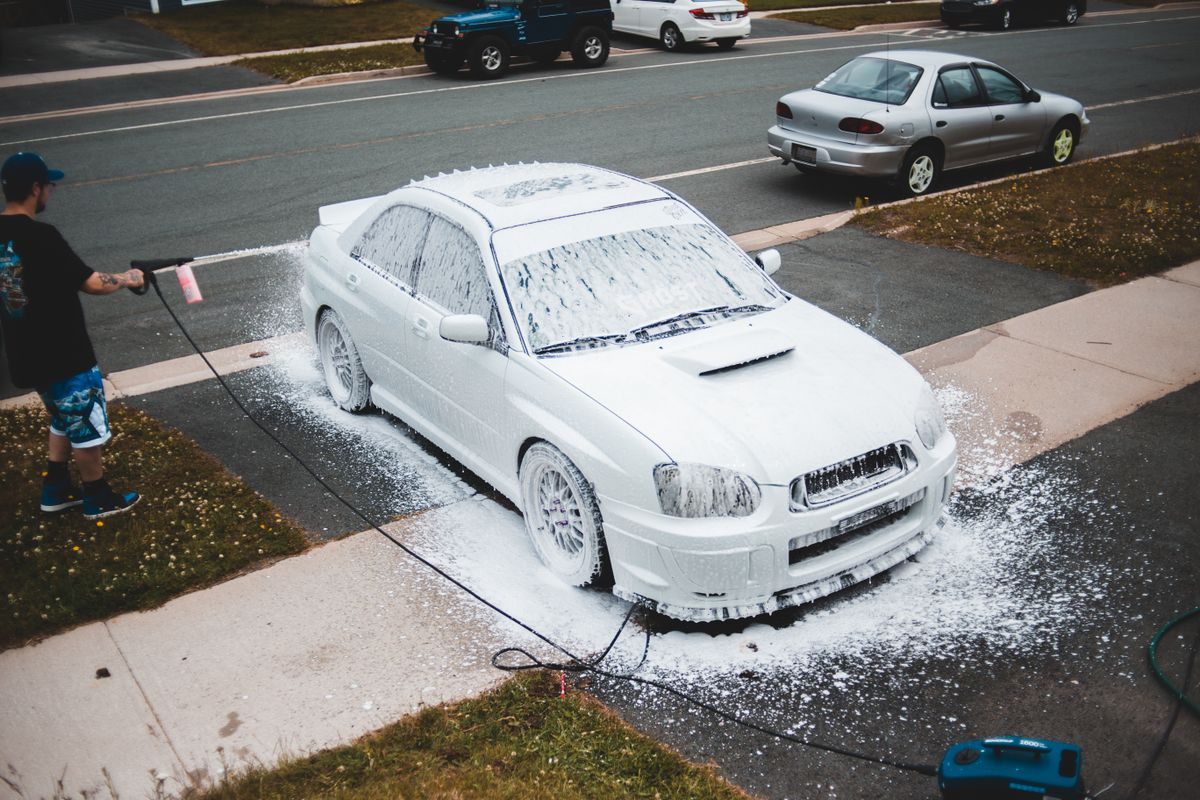
Most people start a business by copying what established competitors own: a branded truck, a trailer with a water tank, a hot-water unit, and surface cleaners in three sizes. That’s the wrong starting point when you have no money.
A better approach is first principles thinking. Strip the business down to its basic facts. To finish one paid residential job, you need:
- A customer who agrees to a price.
- A pressure washer strong enough for the surface.
- Water (usually the customer’s outdoor spigot) and a hose.
- A cleaning solution suited to the surface.
- A way to get yourself and the equipment to the job.
- Basic safety gear: eye protection, gloves, and closed-toe, non-slip shoes.
Everything else is an upgrade you can earn later. A trailer, a bigger machine, and a logo-wrapped truck should come out of profits, not your savings.
Step 2: Pick a Narrow Starting Service
Don’t try to offer every service at once. Choose the job you can do safely and well with basic equipment, then expand.
Good starting services for a beginner:
- Driveways and sidewalks. Concrete is forgiving, and the before-and-after results make great photos.
- Patios and walkways. These are small jobs that are easy to quote and quick to finish.
- Fences. The work is repetitive and low to the ground.
Jobs to hold off on until you have training and insurance:
- Roofs. Working at height is dangerous, and many roofing materials can be damaged by high pressure. Roof cleaning is usually done with low-pressure “soft washing” methods.
- Second-story siding. This needs ladders or extension equipment and adds fall risk.
- Wood decks and soft surfaces. Too much pressure can splinter wood or etch softer materials.
Starting narrow also makes your marketing easier. “Driveway and sidewalk cleaning” is clearer to a homeowner than “exterior cleaning solutions.”
Step 3: Get Equipment Without Buying It
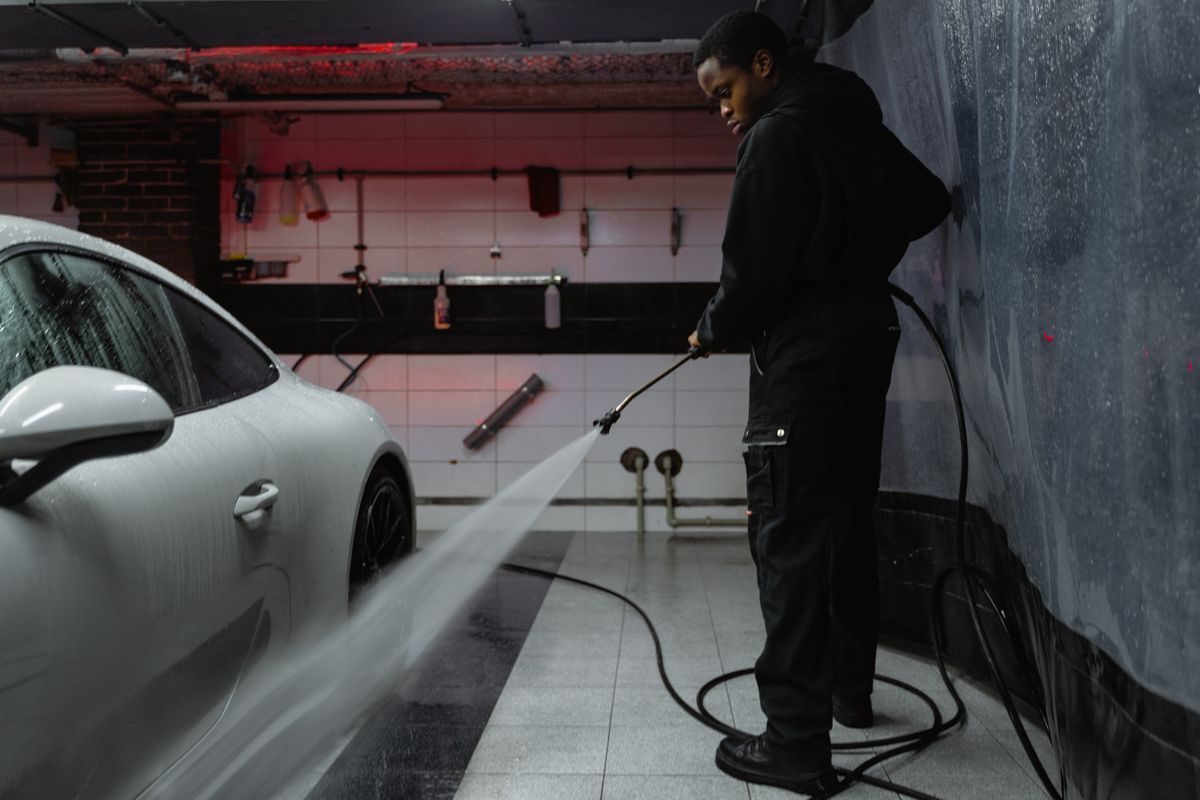
This is where “no money” becomes possible. You have three main options.
Rent per job
Big-box tool rental centers rent pressure washers by the hour, day, and week. Home Depot’s tool rental page, for example, lists a four-hour minimum, with daily, weekly, and four-week rates, and requires an ID and a credit card. SlashGear reported a 2,000 to 2,700 PSI gas model at $61 for four hours and $87 for a day. Rates vary by store, so check your local location.
The key move is to book the job first, then rent. If you can stack two or three driveways into the same day, a single daily rental covers all of them.
Borrow
Many homeowners own a pressure washer they use once a year. A neighbor, relative, or friend may lend one for a share of the first job’s earnings. Put the deal in writing, even if it’s a short text message, so there’s no confusion about who pays for repairs.
Buy used, later
Once you have steady bookings, a used gas pressure washer from a local marketplace can pay for itself quickly. Inspect the pump, ask how many hours it has run, and test it before paying. Buy only after rental costs start eating into your profit.
Step 4: Get Paid Before You Spend
Cash flow is the real constraint for a business with no money. A few habits keep you from going backwards:
- Take a deposit. Ask for a deposit when the customer books, enough to cover the rental and supplies.
- Collect payment on completion. Do a walk-through with the customer, show the finished work, and get paid before you leave.
- Use free or low-cost payment tools. Mobile payment apps let you accept cards with no upfront hardware cost. Expect to pay a per-transaction fee.
- Keep business money separate. A separate account makes it far easier to track profit and prepare taxes. See the guide to small business financial management for simple systems.
Step 5: Price Jobs So You Actually Make Money
New operators often underprice because they’re nervous. Low prices attract price shoppers and leave nothing for equipment upgrades.
Angi’s guide to pricing pressure washing jobs describes two common methods: charging by the hour or by the square foot. Angi’s house-washing guide lists a typical range of $0.10 to $0.50 per square foot. Its driveway cost guide quotes $0.30 to $0.55 per square foot, or $60 to $125 per hour, and notes that many pros set minimum charges for small jobs.
A simple way to set your own price:
- Add up direct costs for the job: rental, fuel, cleaning solution, and any disposal costs.
- Estimate your time, including travel, setup, and cleanup.
- Decide what your hour is worth.
- Add a margin for overhead and profit.
- Compare the total to local market rates and adjust.
Set a minimum job price so that small jobs still cover the rental and your travel. The full method, with a worked example, is in the guide on how much to charge for your services.
Step 6: Handle the Legal Basics
None of these steps needs to be expensive, but they shouldn’t be skipped.
- Business registration and licenses. Requirements depend on your city, county, and state. Check with your local government before you start.
- An EIN. A sole proprietor without employees can often use a Social Security number, but an Employer Identification Number keeps it private. The IRS is clear: “You never have to pay a fee for an EIN.”
- Insurance. General liability insurance protects you if you damage a customer’s property. Get quotes before taking larger jobs. Some homeowners and most commercial clients will ask for proof of coverage.
- Taxes. If you’re self-employed, the IRS charges self-employment tax of 15.3% (12.4% for Social Security and 2.9% for Medicare) once your net earnings reach $400 or more. Set aside part of every payment.
Step 7: Know the Wastewater Rules
This is the step most beginners miss. The water that runs off a driveway carries dirt, oil, and cleaning chemicals. In many cities, letting it flow into a storm drain is illegal, because storm drains often lead straight to creeks, rivers, or the ocean without treatment.
San Diego’s Think Blue mobile business fact sheet, for example, says it’s illegal to discharge polluted water from pressure washing into the storm drain system. It warns that “Violations can cost up to $10,000 per day per incident.” The EPA also publishes best practices for equipment washing that cover containing and properly disposing of wash water.
Rules differ from place to place, so call your city’s stormwater or public works department before your first job. Practical habits that help:
- Block or cover nearby storm drains while you work.
- Use the least amount of chemical that does the job, and choose products suited to the surface.
- Direct runoff onto landscaped areas only where your local rules allow it.
- As you grow, budget for water recovery equipment if your area requires it for commercial work.
Step 8: Find Your First Customers for Free
You don’t need a paid ad budget to land the first jobs.
- Before-and-after photos. Clean your own driveway, or a friend’s, for free, and photograph the result from the same angle. That pair of photos is your best sales tool.
- A Google Business Profile. Google Business Profile is free and helps you show up in local map results. The guide to local SEO explains how to set it up and collect reviews.
- Neighborhood groups. Post your before-and-after photos with a clear service area and starting price.
- Door-to-door on one street. After finishing one driveway, knock on the neighbors’ doors. They can see the result right next to their own.
- Partner with related services. Lawn care crews, painters, and real estate agents run into customers who need exterior cleaning. Trade referrals.
Ask every happy customer for a review and a referral. Early reviews matter more than any flyer.
Step 9: Reinvest in the Right Order
Once money starts coming in, upgrade in an order that removes your biggest bottleneck first:
- Insurance, if you didn’t start with it.
- Your own pressure washer, once rentals cost more than a used machine would.
- A surface cleaner for flat concrete. It speeds up driveways and gives a more even finish.
- Transportation, such as a small utility trailer.
- Larger or specialty equipment, like soft-wash systems or water recovery, only when you have the demand and training to use it.
If you find you enjoy outdoor service work, pressure washing pairs well with other services. Browse the list of business ideas to start for related options like window cleaning, lawn care, and junk removal.
What If You Really Have Zero Dollars?
If you can’t cover even a single rental, there are still options:
- Pre-sell the first job. Book one paying customer and take a deposit large enough to cover the rental.
- Work for an established company first. Some pressure washing companies hire seasonal helpers. You’ll get paid to learn the trade and see how pricing works.
- Look into a microloan. The SBA microloan program offers loans of up to $50,000 through nonprofit lenders, and the average is about $13,000. A pressure washing start-up usually needs far less than that, and borrowing should come after you’ve proven people will pay.
Frequently Asked Questions
Can you really start a pressure washing business with no money?
You can start with very little money. Renting equipment per job, borrowing a machine, or taking deposits lets you complete paid work before you buy anything. You’ll still have small costs like fuel, cleaning solution, and eventually insurance.
How much do pressure washing jobs pay?
Prices vary by region and job size. Angi reports a national average of about $312 to pressure wash a house, with driveways typically $100 to $250 and fences $150 to $300. Check local competitors before setting your rates.
Do I need a license to start a pressure washing business?
It depends on your city, county, and state. Many areas require a general business license. Some also have stormwater rules that affect how you handle wash water. Contact your local government before your first job.
What equipment do I need to start?
At minimum, you need a pressure washer suitable for the surface, a hose, a cleaning solution, and safety gear such as eye protection, gloves, and non-slip shoes. You can rent the pressure washer at first and buy your own once you have regular bookings.
Is it legal to let pressure washing water go down the storm drain?
In many cities, no. Storm drains often flow untreated into local waterways. San Diego, for example, warns that violations can cost up to $10,000 per day per incident. Check your local rules and block drains while you work.