Invoice vs Receipt: What’s the Difference?
Listen to this article
An invoice and a receipt are both records of a sale, but they’re sent at different times and do different jobs. An invoice asks for payment. A receipt confirms payment was made. Using the right one at the right time helps you get paid on time, keep clean records, and avoid confusion with customers.
This guide explains both documents in plain English, walks through an illustrative example for a handyman business, and lists what each one should include.
The Short Answer
- An invoice is a request for payment. You send it before the customer pays, and it says how much they owe and when.
- A receipt is proof of payment. You give it after the customer pays, and it confirms what they paid and how.
| Invoice | Receipt | |
|---|---|---|
| Purpose | Requests payment | Confirms payment |
| When it’s sent | Before payment | After payment |
| Key detail | Due date and payment terms | Date paid and payment method |
| Shows | Amount owed | Amount paid |
| On your books | Adds to accounts receivable | Clears the receivable or records a cash sale |
Worked Example: A Handyman Job
A handyman finishes a bathroom repair for a homeowner. All figures are illustrative.
Step 1: The invoice. The same day, he sends an invoice:
| Invoice #1047 | |
|---|---|
| Replace vanity and faucet (labor) | $420 |
| Materials | $310 |
| Total due | $730 |
| Due date | 14 days from invoice date |
| Payment methods | Card, bank transfer, or check |
Step 2: Payment. Nine days later, the homeowner pays $730 by card.
Step 3: The receipt. The handyman sends a receipt showing invoice #1047, $730 paid, the payment date, and “paid by card.” The homeowner now has proof for their records, and the handyman’s books show the invoice as paid.
If the homeowner had paid on the spot, the handyman could skip the invoice and give a receipt only. That’s how most shops and cafes work.
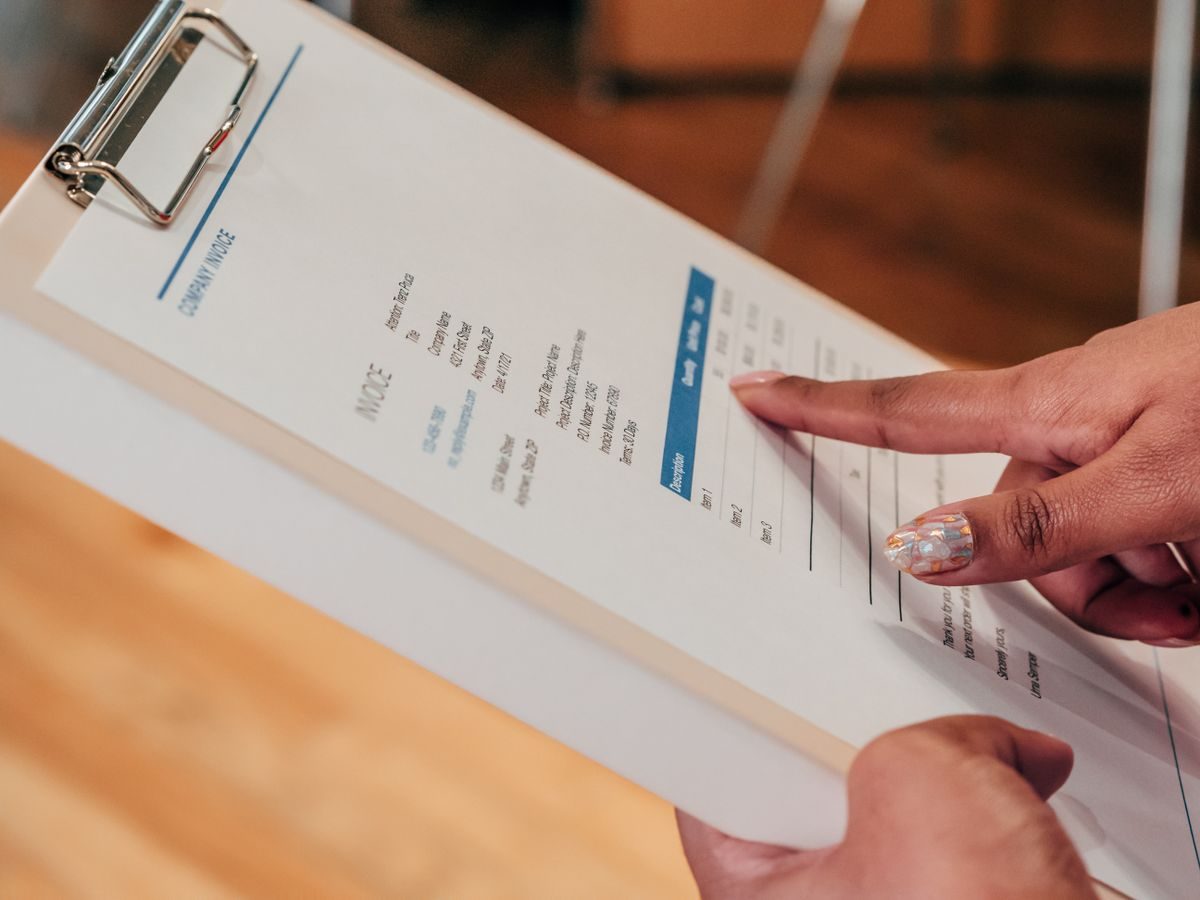
What to Put on an Invoice
- Your business name, address, and phone number
- The word “Invoice” and a unique invoice number
- Invoice date and due date
- Customer name and address
- A clear list of work or items, with quantities and prices
- Any sales tax, shown separately
- Total amount due
- Payment terms, such as Net 14 or Net 30
- Accepted payment methods
What to Put on a Receipt
- Your business name and contact details
- The word “Receipt” and a receipt number
- Date of payment
- What was paid for, or the invoice number it relates to
- Amount paid and any tax included
- Payment method
- Balance remaining, if it was a partial payment
Tips for Small Businesses
- Number everything in order. Sequential numbers make it easy to spot a missing invoice and keep tidy records.
- Send invoices the same day. The sooner the invoice goes out, the sooner you get paid.
- Send receipts automatically. Most card readers and invoicing tools can email a receipt when payment arrives.
- Keep copies of both. Your accountant will need them, and tax authorities may ask for them.
- Keep receipts for your own spending too. Supplier receipts back up your business expenses. See small business financial management.
Clear invoicing is one of the simplest fixes for small business cash flow problems.
Frequently Asked Questions
Is an invoice proof of payment?
No. An invoice only shows that money is owed. A receipt, a bank statement, or an invoice clearly marked “paid” with a payment date is proof of payment.
Can an invoice be used as a receipt?
Yes, if you mark it as paid and add the payment date and method. Many invoicing tools do this automatically when payment arrives.
Do I need to give a receipt for every sale?
It’s good practice, and customers often expect one. Some places have rules about when a receipt must be offered, so check the rules where you operate.
What’s the difference between a bill and an invoice?
They’re the same document seen from different sides. You send an invoice to a customer. When you receive one from a supplier, you’d usually call it a bill.
How long should I keep invoices and receipts?
Keep them for several years. The exact period depends on your tax rules, so ask your accountant. Digital copies are usually fine if they’re clear and complete.