
The Goal by Eliyahu Goldratt: Summary and Lessons for Small Businesses
Listen to this article
The Goal is an unusual business book. It’s a novel. Eliyahu M. Goldratt, a physicist turned management thinker, wrote it with Jeff Cox and published it in 1984. Instead of lecturing, the book tells the story of a struggling factory manager and lets the lessons emerge from his mistakes.
The ideas in the story became known as the Theory of Constraints. They have spread far beyond manufacturing, into hospitals, software teams, and service businesses of every size. The central message is simple: every system has a constraint, and the performance of the whole system depends on how you manage that constraint.
This summary of The Goal by Goldratt covers the story, the big ideas, and the five focusing steps. Then it applies those steps to a small service crew, so you can see how a factory novel translates to a business with a van and a few employees.
The Story in Brief
Alex Rogo manages a manufacturing plant that is losing money. Orders are late, inventory is piling up, and the division vice president gives him an ultimatum: turn the plant around in ninety days or it will be closed.
By chance, Alex runs into Jonah, a physicist he knew from his student days. Jonah doesn’t give him answers. He asks questions, most of them uncomfortable, and sends Alex back to the plant to figure things out. At the same time, Alex’s marriage is under strain because he’s working all the time. The personal story isn’t filler. It shows the same pattern as the plant: lots of activity, very little progress toward what actually matters.
Over the course of the book, Alex and his team discover why the plant is failing, and the fix turns out to be less about working harder and more about focusing on the right place.
Big Idea 1: Know What the Goal Is

Jonah’s first question to Alex is: what is the goal of the plant? Alex tries several answers, such as productivity, efficiency, and quality. Each one is important, but none is the goal. Eventually he lands on it: the goal of a business is to make money.
Everything else is a means to that end. A machine running at full efficiency is useless if it produces parts no one is buying. A department that hits its own targets might still be hurting the business as a whole.
For a small business owner, this is a useful reality check. Being busy, keeping everyone fully booked, or buying better equipment only matters if it moves the business closer to making money, now and in the future.
Big Idea 2: Three Measures That Matter
Jonah gives Alex three measures to judge any decision:
- Throughput: “the rate at which the system generates money through sales.”
- Inventory: “all the money that the system has invested in purchasing things which it intends to sell.”
- Operational expense: “all the money the system spends in order to turn inventory into throughput.”
The goal, in these terms, is to increase throughput while reducing inventory and operational expense. The order matters. Goldratt’s point is that most companies obsess over cutting costs, when the bigger lever is usually throughput.
Note the phrase “through sales.” Product sitting in a warehouse isn’t throughput. Neither is a half-finished job. Money only counts when it comes in from a customer.
Big Idea 3: Dependent Events and Statistical Fluctuations
One of the most memorable scenes happens on a weekend hike. Alex leads his son’s scout troop, and the line of boys keeps stretching out. The fast kids at the front race ahead, the kids at the back fall further behind, and the whole troop moves at the pace of its slowest member, a boy named Herbie.
Alex realizes that the hike works like his plant. Each step depends on the one before it (dependent events), and each person’s speed varies from moment to moment (statistical fluctuations). Gains at one point don’t carry forward, but delays do, and they add up. He demonstrates this to the boys with a simple game using a die and matchsticks, passing matches down a line.
His fix is clever. He moves Herbie to the front of the line so the group can’t outrun him, and the other boys share the load from Herbie’s heavy pack. The troop starts moving together, and faster.
Big Idea 4: Bottlenecks Control the System
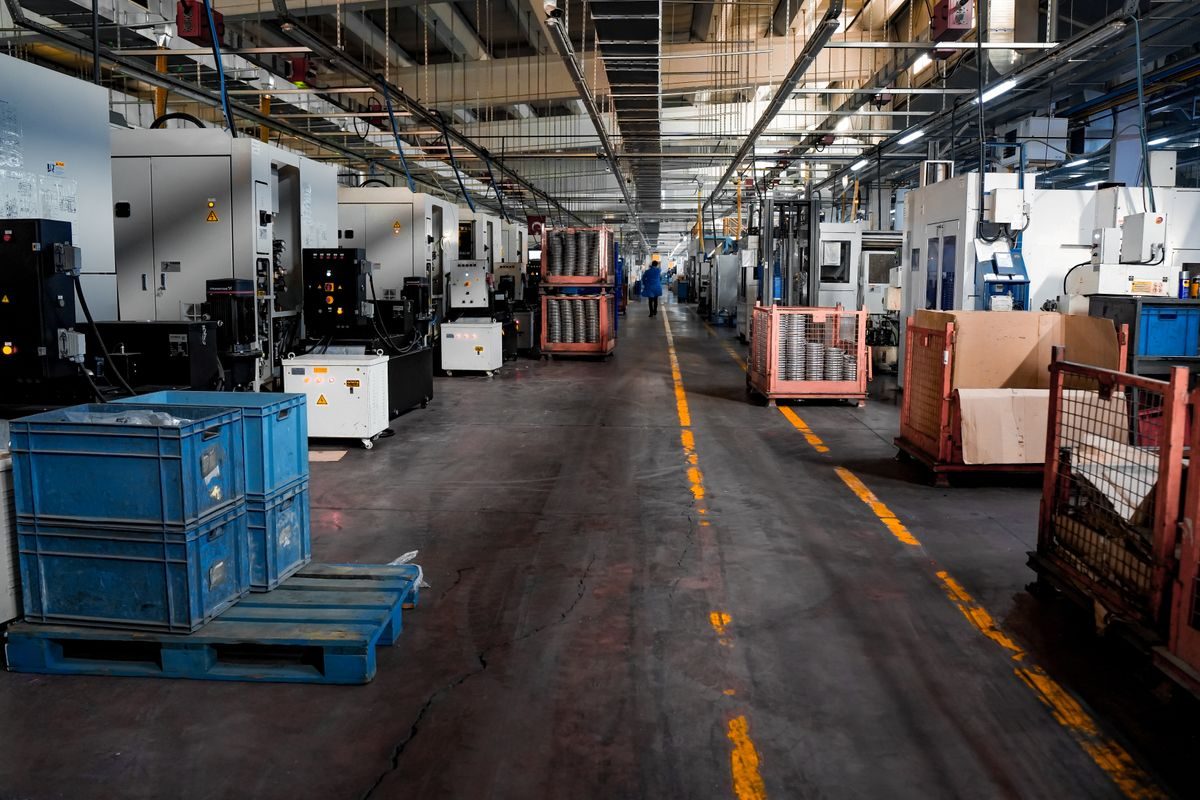
Back at the plant, Alex learns to spot bottlenecks. Jonah defines a bottleneck as “any resource whose capacity is equal to or less than the demand placed upon it.” In Alex’s plant, the bottlenecks turn out to be a heat-treat furnace and a machine called the NCX-10.
The lesson that follows is one of the most quoted lines in the book: “An hour lost at a bottleneck is an hour lost for the entire system.” By contrast, saving an hour on a resource that isn’t a bottleneck does nothing for output. The book calls it a mirage.
This turns traditional thinking upside down. Keeping every worker and machine busy isn’t the goal. Non-bottleneck resources that run flat out just build up piles of work in front of the bottleneck. What matters is making sure the bottleneck never sits idle, never works on the wrong thing, and never processes defective parts.
Big Idea 5: The Five Focusing Steps
The process that grew out of the book, refined in later editions and Goldratt’s later work, is known as the five focusing steps. The TOC Institute lays them out like this:
- Identify the constraint. Find the one step that limits how much the whole system can produce.
- Exploit the constraint. Get the most out of it with what you already have. Don’t let it sit idle or waste time on low-value work.
- Subordinate everything else. Set the pace of every other step to support the constraint, even if that means some resources aren’t fully busy.
- Elevate the constraint. If it’s still limiting the system, add capacity by hiring, buying equipment, or outsourcing.
- Repeat, and watch for inertia. Once the constraint is broken, a new one appears somewhere else. Go back to step 1, and don’t let old rules become the new constraint.
The order matters. Most businesses jump straight to step 4 and spend money on new capacity before squeezing the most out of what they already have.
Applying the Five Focusing Steps to a Small Service Crew
Here’s an illustrative example. A landscaping business has an owner, two three-person crews, and a part-time office manager. Demand is strong, but the backlog keeps growing and customers complain about slow quotes. The details below are hypothetical.
Step 1: Identify. The crews aren’t the problem. They often finish early and wait for their next job. The real constraint is the owner, who does every site visit and writes every estimate. Jobs can’t start until he’s quoted them, and he can only fit in a few visits a day around everything else.
Step 2: Exploit. The owner stops doing things anyone else could do. The office manager handles scheduling and callbacks. Customers send photos and measurements before visits, so simple jobs can be quoted remotely. Site visits are grouped by neighborhood to cut drive time. Not a dollar has been spent, but the owner’s quoting capacity goes up.
Step 3: Subordinate. The crews stop pushing for more work to stay busy. Instead, the crew leads help the constraint by noting add-on work on current jobs and passing photos to the owner, which makes quotes quicker. The office manager doesn’t book new consultations faster than the owner can quote them.
Step 4: Elevate. After a few months, estimating is still the limit. The owner trains one crew lead to quote standard jobs using a price sheet, and keeps only the complex jobs for himself.
Step 5: Repeat. Now quotes go out quickly, and the new constraint is crew capacity. That’s a different problem, with different fixes, and the cycle starts again.
Notice how little of this involved working harder. It involved finding the one place that was limiting the business and organizing everything around it.
Self-Check: Where Is Your Constraint?
Ask yourself:
- Where does work pile up waiting in your business? Quotes, approvals, invoices, materials?
- Which person or resource does everyone else wait on?
- If you added one more person to a step, which step would actually increase what you deliver?
- Is your constraint ever idle, or doing work someone else could do?
- Are your other teams measured on staying busy, or on helping the constraint?
The constraint isn’t always inside the business. Sometimes it’s the market: you can deliver more, but you don’t have enough customers. In that case, the constraint is sales, and the same steps apply.
Action List
- Name the goal. Write down how your business makes money and which measure shows it. Use throughput, not activity.
- Map the flow. List each step from first contact to cash in hand, and note where work waits.
- Find the constraint. Pick the one step that limits everything else. If you’re the owner, check yourself first.
- Protect it. Remove low-value tasks from the constraint, and make sure it never sits idle waiting for inputs.
- Pace everything else to it. Stop rewarding people for being busy when that just creates piles of work.
- Add capacity last. Spend money on the constraint only after you’ve exploited and subordinated.
- Check again in a quarter. The constraint will move. Find the new one.
Final Thoughts
The Goal has lasted for decades because it’s easy to read and hard to forget. The story makes abstract ideas like dependent events and bottlenecks feel obvious, and the five focusing steps give you a repeatable process to improve any system.
It also pairs well with other operational thinking. Lean principles focus on removing waste across the whole flow, and The Goal tells you where to look first. When a specific problem keeps coming back, a structured method like 8D problem solving helps you get to the root cause. And the Elon Musk algorithm shares the same instinct: question and simplify before you speed up or automate. For the bigger picture of how these pieces fit, see this guide to business operations.
You can find the book on the North River Press page for The Goal.
Frequently Asked Questions
What is the main idea of The Goal by Goldratt?
The main idea is that every system has a constraint, and the output of the whole system is limited by it. To improve performance, you identify that constraint and organize everything else around it, instead of trying to make every part of the business more efficient.
What are the five focusing steps?
The five focusing steps are: identify the constraint, exploit it, subordinate everything else to it, elevate it, and repeat the process while watching for inertia. They form the core process of the Theory of Constraints.
What does Herbie represent in The Goal?
Herbie is the slowest scout on the hike, and he represents the bottleneck. The troop can only move as fast as Herbie. Putting him at the front and lightening his load shows how to manage a constraint instead of pushing everyone else harder.
Is The Goal only useful for manufacturing?
No. The story is set in a factory, but the Theory of Constraints applies to any system with steps that depend on each other. Service businesses, software teams, and hospitals use it, and a small business can apply it to quoting, scheduling, or delivery.
What is the difference between a bottleneck and a non-bottleneck?
A bottleneck is a resource whose capacity is equal to or less than the demand placed on it. A non-bottleneck has more capacity than demand. Time lost at a bottleneck is lost for the whole system, while time saved at a non-bottleneck usually doesn’t increase output.